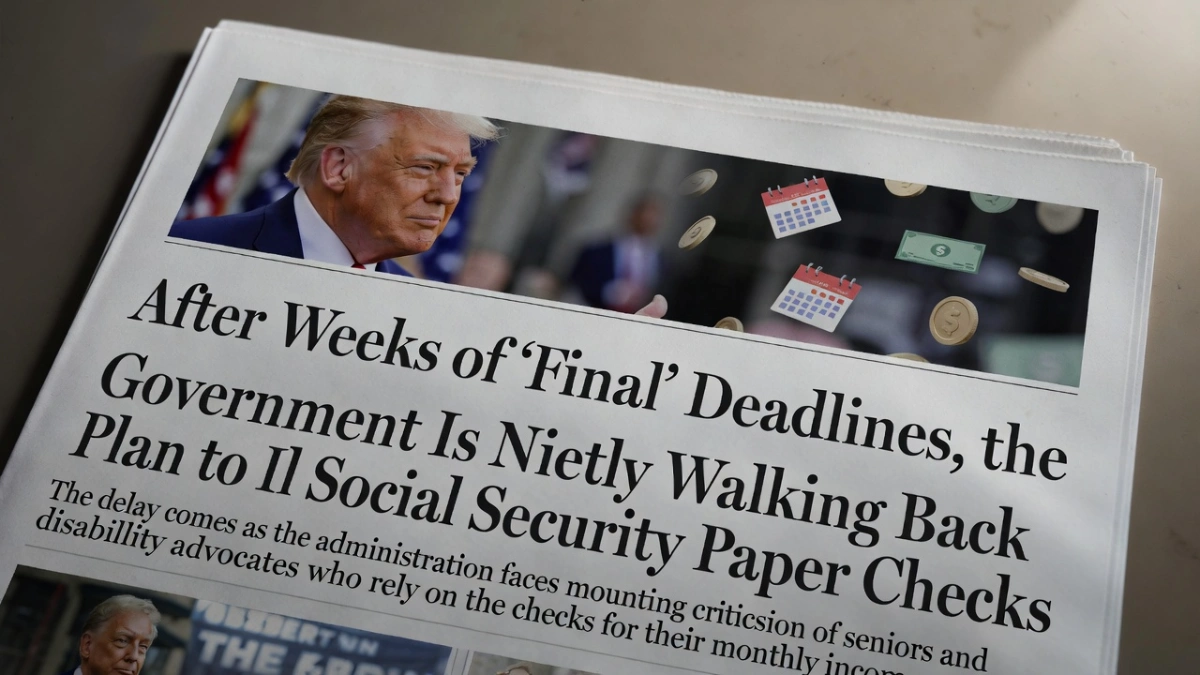
After weeks of messaging that paper Social Security checks would soon be fully phased out, new signals suggest the government may be reconsidering or slowing parts of that transition. The shift has sparked confusion among beneficiaries who rely on mailed checks instead of electronic deposits.
Here’s what’s happening and what it could mean for recipients.
Why Paper Checks Were Being Phased Out
The Social Security Administration has long encouraged beneficiaries to switch to electronic payments through direct deposit or prepaid debit options. Officials have cited security, cost savings, and faster delivery as reasons to move away from paper checks.
Electronic payments reduce fraud risks and eliminate mail delays, making them more efficient for both recipients and the agency.
What Changed After ‘Final’ Deadline Warnings
Recent communications suggested that mailed checks would be eliminated entirely after a firm deadline. However, reports now indicate that implementation may be more gradual than initially presented.
Concerns over access issues for elderly, rural, or unbanked beneficiaries appear to have influenced the tone of recent updates.
Who Could Be Affected Most
Beneficiaries who do not have bank accounts or access to digital payment systems are most impacted by the proposed change. Some seniors, individuals in remote areas, and people without reliable internet access may face challenges transitioning to electronic options.
For these groups, sudden elimination of paper checks could create financial disruptions.
Electronic Alternatives Available
Recipients are typically encouraged to use:
Direct deposit into a bank account
Direct Express prepaid debit card programs
Other approved electronic payment methods
These options provide quicker access to funds and reduce the risk of lost or stolen checks.
Why the Government May Be Slowing the Rollout
Large-scale administrative changes often require outreach, education, and transition support. Delays may allow additional time for beneficiaries to update payment preferences and avoid unintended service interruptions.
Policy adjustments sometimes occur when public feedback highlights implementation challenges.
What Beneficiaries Should Do Now
If you still receive paper checks, consider reviewing available electronic options. Updating your payment method proactively can prevent potential disruptions in the future.
Monitoring official agency announcements ensures you stay informed about any confirmed timeline changes.
Conclusion: Although paper Social Security checks were reportedly facing a firm phase-out deadline, recent developments suggest the transition may not happen as abruptly as initially communicated. Beneficiaries should stay alert to official updates and explore secure electronic alternatives to ensure uninterrupted payments.
Disclaimer: Payment policy changes are determined by official government decisions and may evolve. For the most accurate and personalized information, consult the Social Security Administration directly.