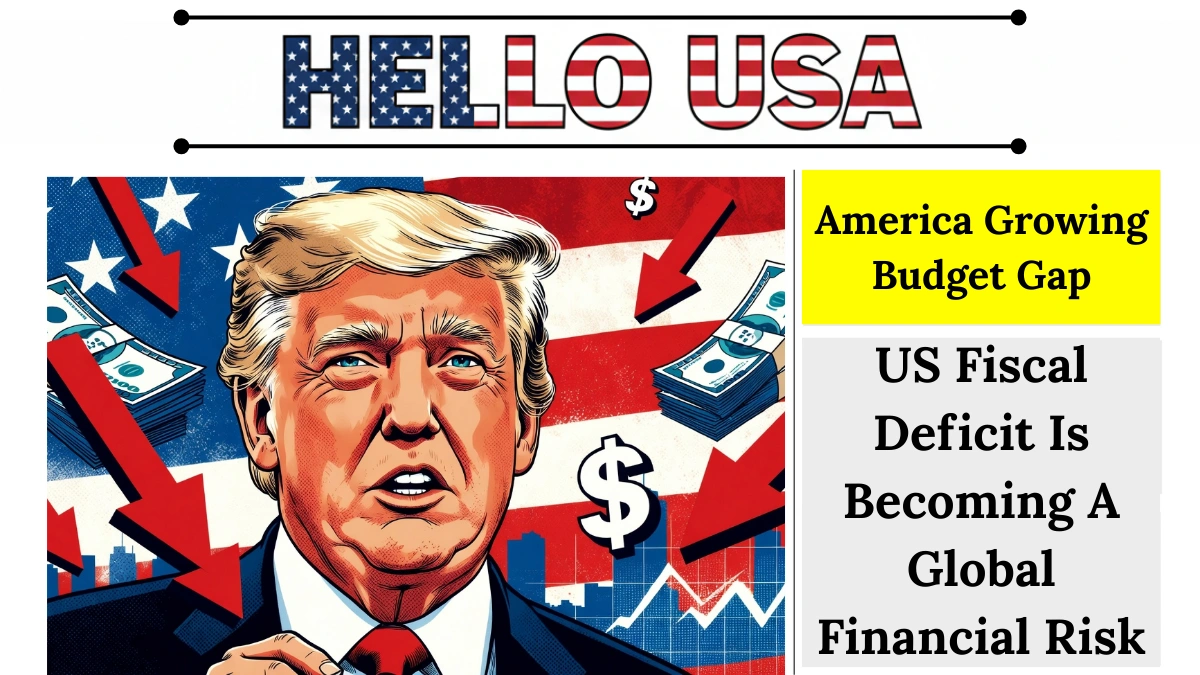
The rapidly expanding US fiscal deficit is no longer just a domestic policy concern. Economists, investors, and governments worldwide are increasingly warning that America’s budget imbalance could pose a serious threat to global financial stability, given the central role the United States plays in the world economy.
United States issues the world’s most important reserve currency, and that makes its fiscal health a global issue, not a local one.
What the US Fiscal Deficit Really Means
A fiscal deficit occurs when government spending exceeds revenue. In the US, persistent high spending on defense, social programs, healthcare, and debt interest—combined with lower-than-needed tax revenues—has pushed annual deficits into historically high territory.
Unlike many countries, the US can borrow cheaply and extensively because global markets trust its economy and currency. But that trust is not unlimited.
Rising Debt and the Interest Rate Problem
As deficits grow, so does national debt. Higher debt means higher interest payments, especially in a world of elevated interest rates. The US government now spends a massive and growing share of its budget just to service existing debt.
This creates a dangerous feedback loop. More debt leads to higher interest costs, which then widen the deficit even further, forcing additional borrowing.
Why Global Markets Care So Much
US government bonds are considered one of the safest assets in the world. They are widely held by foreign governments, central banks, and financial institutions. If confidence in US fiscal discipline weakens, investors may demand higher yields to compensate for perceived risk.
Higher US bond yields can trigger global consequences, including capital outflows from emerging markets, weaker currencies abroad, and tighter financial conditions worldwide.
Impact on the US Dollar’s Global Role
The US dollar’s dominance is built on trust in American institutions and fiscal responsibility. Persistent deficits raise concerns about long-term sustainability. While the dollar remains dominant, some countries are already exploring alternatives to reduce dependence on US financial systems.
A gradual erosion of dollar confidence would reshape global trade, reserves, and investment flows in unpredictable ways.
Pressure on Central Banks Worldwide
The Federal Reserve plays a key role in managing inflation and financial stability, but large fiscal deficits complicate its job. Heavy government borrowing can work against monetary tightening, making inflation harder to control.
Other central banks are forced to react as US financial conditions spill across borders, often tightening policy to defend their currencies or stabilize markets.
Risks for Emerging Economies
Emerging markets are especially vulnerable. Rising US interest rates and stronger dollar cycles—often linked to deficit-driven borrowing—can increase debt burdens for countries that borrow in dollars. This raises the risk of financial crises, capital flight, and economic instability in developing regions.
Warnings from Global Institutions
International bodies such as the International Monetary Fund have repeatedly warned that unchecked fiscal expansion in major economies increases systemic risk. Because the US sits at the core of the global financial system, its fiscal choices have outsized consequences.
What might be manageable domestically can become destabilizing internationally.
Why This Is Different From the Past
The US has run deficits before, but today’s situation is unique due to aging demographics, rising healthcare costs, geopolitical tensions, and already-high debt levels. There is less room for error, and shocks—economic or political—could amplify risks much faster than in previous decades.
What Could Restore Confidence
Stabilizing the deficit does not require austerity alone. A mix of long-term fiscal planning, targeted spending reforms, sustainable revenue policies, and credible debt management strategies could reassure markets. What matters most is predictability and political willingness to act.
Without a clear plan, uncertainty becomes the biggest threat.
Conclusion: The US fiscal deficit is no longer just an American budget issue—it is a global financial concern. As debt rises and borrowing accelerates, the risk of market disruption, currency volatility, and international spillovers grows. Given the central role of the US economy and dollar, sustained fiscal imbalance could undermine global stability unless credible corrective action is taken.
Disclaimer: This article is for informational purposes only and reflects current economic analysis and publicly available data. Fiscal conditions and global market responses may change based on policy decisions, economic growth, and geopolitical developments.